welcome to mies and peas!

your nonstop source of everything science of architecture, including information for the ARE, LEED, and PE exams.
Showing posts with label Eiffel Tower. Show all posts

Thursday, September 22, 2011

MIES - Palais Garnier


Atop the Palais Garnier at Sunrise

Oh, what it must have been like to be a fly on the wall in nineteenth-century Paris.  The height of opera, the height of the Ecole des Beaux Arts, the arrival of cuisine and the stylings of a new world order.  Things for the bourgeois were pretty damn good then.  Literary colossuses such as Hugo, Flaubert, Dumas, Zola and others patterned themselves saviors of a wicked age, true, but what a wicked age it was...

This is perhaps the masterstroke of all Beaux-Arts architectural accomplishments: the Palais Garnier.  Built by Charles Garnier in 1875 and fashioned to be Neo-Baroque in style and appearance, what the Eiffel Tower is to steel structures the Palais Garnier is to lavishness altogether.

Just look at it.  The gold lighting.  The coupled pilasters and the exquisite acumen for detail.  The marble staircase.  Thousands of chandeliers and candelabras.  It is a feat we could not accomplish today even with the money we spend on our buildings.  It is a code-defying declaration of national pride and unlike modern spaces - which trumpet simplicity for simplicity's sake - the simplicity here is in the arrangement and promenade.  Grand foyer, grand staircase, regal corridors, box seating, lights, camera, action!


The Grand Staircase

A little history: the Palais Garnier is a building of exceptional opulence. It seats an audience of about 2,200 under a central chandelier which weighs more than six tons, and has a huge stage with room to accommodate as many as 450 artists. The style is monumental and considered typically Beaux-Arts or Neo-Baroque, with use of axial symmetry in plan, and its exterior ornamentation.


The Facade at Night

The Palais is decorated opulently with elaborate multicolored marble friezes, columns, and lavish statuary, many of which portray deities of Greek mythology. Between the columns of the theatre's front façade, there are bronze busts of many of the great composers, Mozart, Rossini, Daniel Auber, Beethoven, Meyerbeer, Fromental Halévy, Spontini, and Philippe Quinault. The interior consists of interweaving corridors, stairwells, alcoves and landings allowing the movement of large numbers of people and space for socializing during intermission. Rich with velvet, gold leaf, and cherubim and nymphs, the interior is characteristic of Baroque sumptuousness.


Chandeliers Reflecting off the Foyer Floors
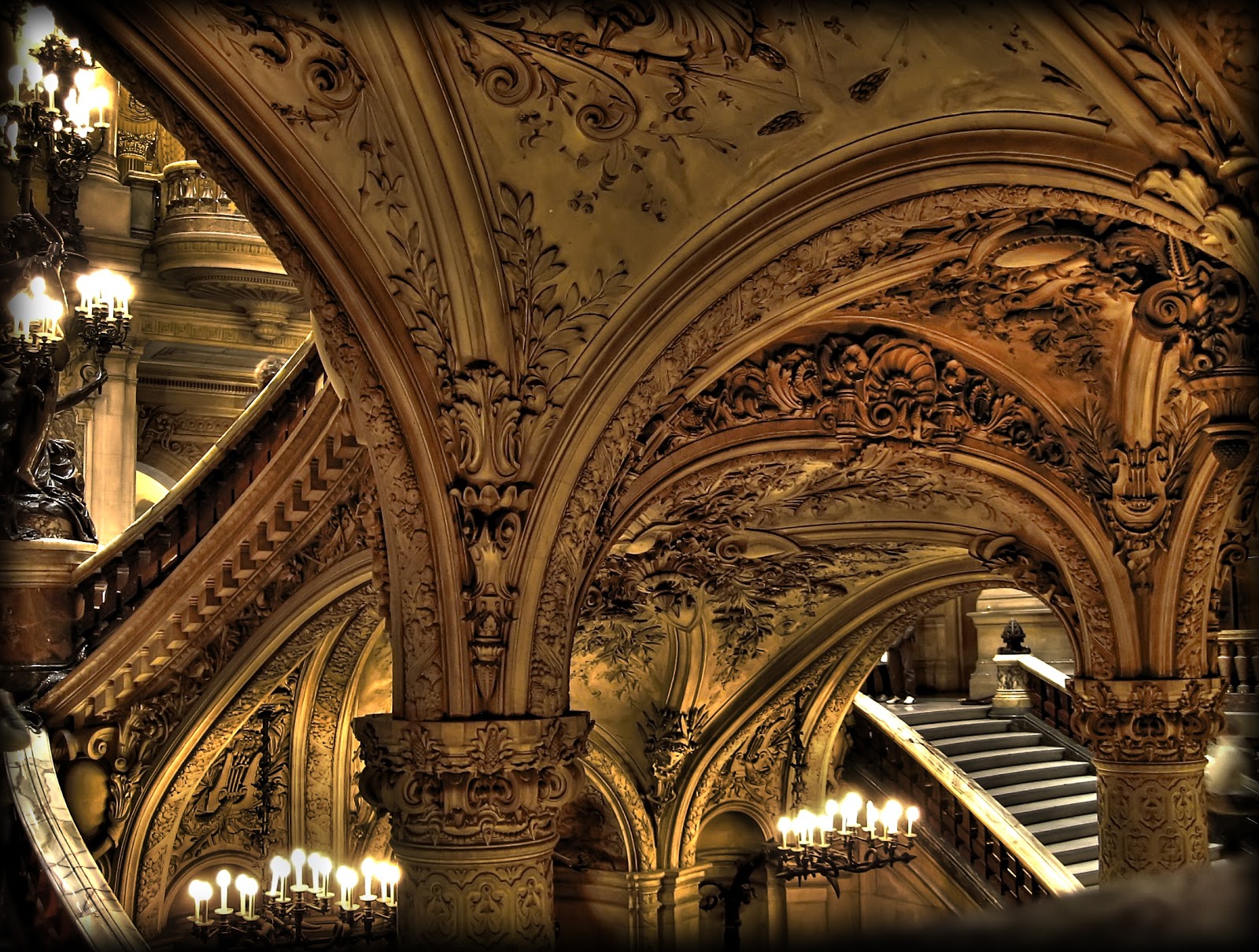

The Beginnings of Organic Architecture

One can notice, if they look closely, the inspiration of other famous buildings such as the Guarantee Building in Buffalo, New York by Louis Sullivan.  There is a depth in organic/floral detailing here that implies a growing away from classical roots to a more modern world.  And yet, this is a building that retains aspects of both schools of thought.  It is not simple, yet is simple in design.  And its ornamentation, while sumptuous, seems appropriate for its day in age.  The Palais Garnier contradicts, inspires, emboldens and declares to all who experience it.  It is simply a force of work.

Friday, September 16, 2011

MIES - Monolith


The Monolith, a giant, rusty cube built at the Expo site on Lake Murten, was supposed to be dismantled at the end of the exhibition on October 20.

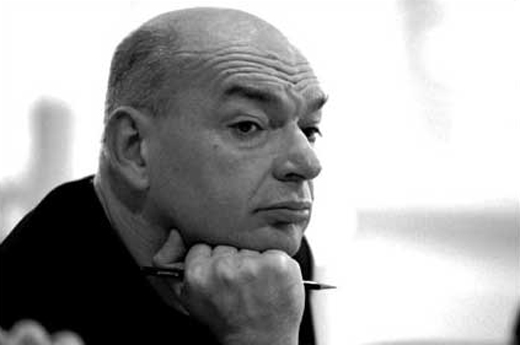
But the celebrated French architect, Jean Nouvel, recently visited his creation to voice his opinion on whether the cube should stay afloat beyond the lifespan of the exhibition.

Nouvel told reporters gathered in the lakeside town of Murten that he would not add his name to a petition which supporters hope will extend the cube’s life by another five years. “That would be immodest on my part,” he commented.

The architect oversaw the design of the Murten Expo site, but refuses to take a position on the future of the Monolith.

“I think that if part of the exhibition should be conserved,” Nouvel told swissinfo, “then it should be decided through democratic and political channels.”


Deiss leads campaign
The Swiss foreign minister, Joseph Deiss, is leading the campaign to preserve the Monolith, while Murten site director, Hans Flückiger, says he would welcome such a move as long as it was the will of the people.

“Certainly it’ll be a great pleasure if we receive positive signals that a part of the population would like to keep what we’ve worked on and constructed,” Flückiger told swissinfo.

“For us, though, it’s very important to hear a united call for the Monolith to be preserved,” he added.

Nouvel says the question of the cube’s future is a pertinent one, given that the Expo site’s theme is “Instant and Eternity”.

“It’s logical to ask whether we need to keep the Monolith, because as a piece of art, it’s very symbolic of eternity.”


Past and present
The rust of the cube’s steel exterior is supposed to symbolise the passing of time, while the sheer size of the structure reflects the fact that the past cannot be overlooked.

Inside the Monolith, two exhibitions bring together Switzerland’s past and present.

Images of a modern Switzerland – complete with flying chalets and extreme close-ups of naked bodies - are flashed on a giant, circular screen on the first floor of the cube interior. On the top floor, visitors are invited to view the 19th century panorama painting of the medieval Battle of Murten by artist Louis 
Braun.

“It’s a structure that encompasses an important part of Switzerland’s heritage…it can be considered a kind of monument to Murten,” Nouvel said.


Test of time
The ultimate test of the Monolith’s longevity will be whether its owners put forward the funds to keep it afloat. Flückiger says the cost is presently being calculated and a report will be presented at the end of the month.

Expo organisers could take their cue from another famous piece of architecture to survive the passing of time: the Eiffel Tower. Today it stands proud in the French capital, Paris, more than a century after its construction for a national exhibition in 1889.

However, Nouvel says Expo organisers will have to consider ways of adapting the structure of the Monolith if it is to remain on Lake Murten beyond Expo.02.

“It’s not a structure built to last a very long time – such as a decade or even a century – so if the decision is taken to keep the structure, some modifications will have to be made.”