welcome to mies and peas!

your nonstop source of everything science of architecture, including information for the ARE, LEED, and PE exams.

Tuesday, June 22, 2010

SS - Load, Shear and Moment Diagrams


SS - Compound Truss Problem


SS - Method of Sections Problem


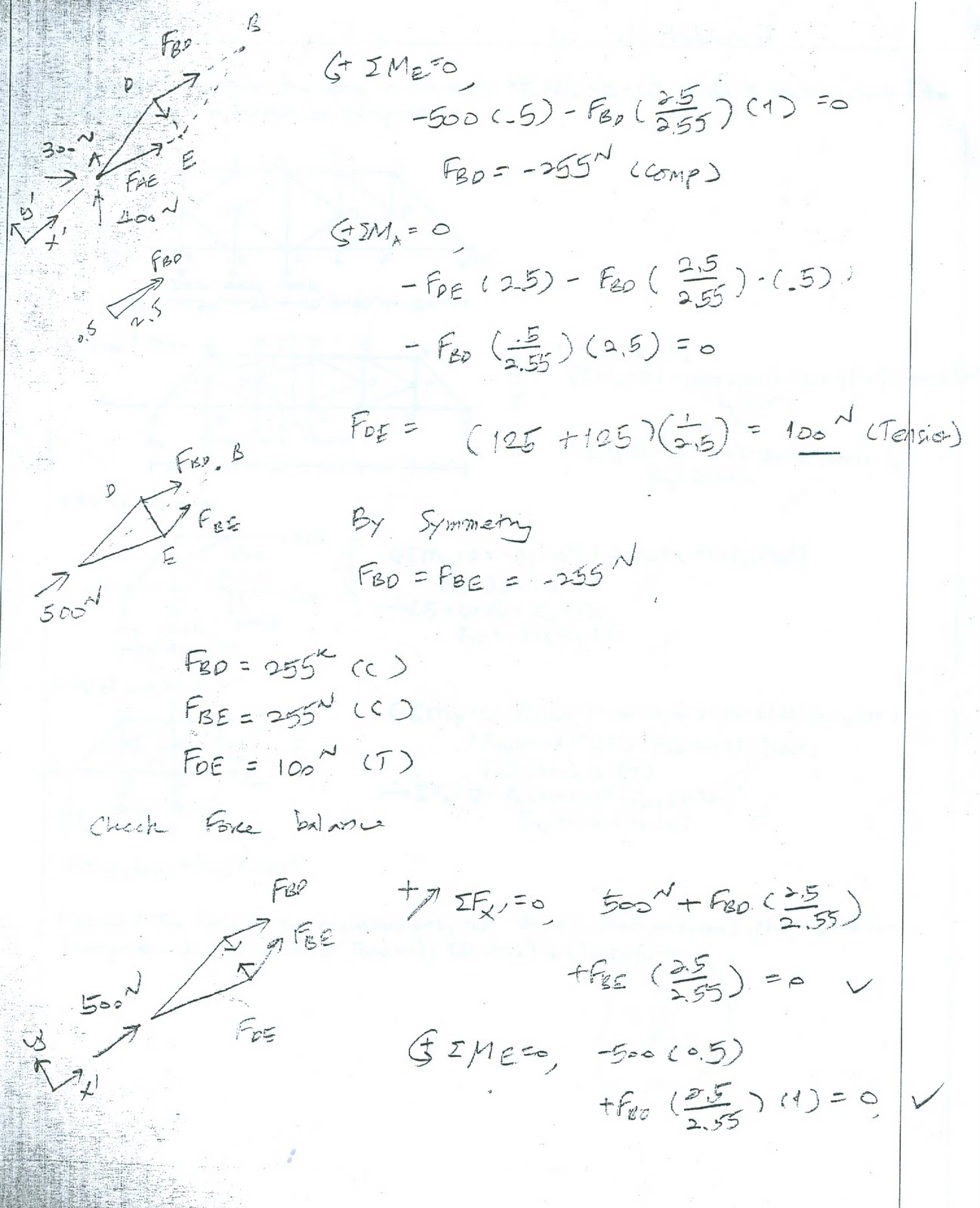
SS - Method of Joints, Method of Sections Problems


SS - Free Body Diagram and Determinacy Problems

SS - And Now For Something Completely Different

As of last month, I started taking courses to become a structural engineer. This, I thought, would be a nice complement to being an architect already.

If I'm to admit the truth, after taking several ARE exams, I've sort of reluctantly fallen in love with the idea of being structurally trained. The structures exams are widely considered the most difficult on the ARE, therefore one should (I believe) overcompensate in this realm of design. Reading the diaries of many architects, such as Frank Lloyd Wright and Mies van der Rohe, who enjoined their pupils to take on the science of the profession, further illustrates the truth that great architecture lies in great construction.

So this is a gift to you - namely, the homework problems that I've taken in my structural analysis courses. Enjoy.

Tuesday, June 1, 2010

BDCS Notes - Soundness of Aggregates


Aggregate Properties: Soundness and Durability

Soundness: The ability of aggregate to withstand weathering. Also called durability.

Soundness is desired in severe climatic conditions. Water freezing in the voids of aggregates generates stresses that can fracture the stones.

ASTM C88 – Simulates weathering by soaking the aggregates in either a sodium sulfate or magnesium sulfate solution. Sulfates cause crystals to grow in the aggregates, simulating the effects of freezing.

A sample is subjected to cycles of sulfate-soaking for 16 hours. Drying follows the soaking process. After five cycles, the aggregates are washed and dried, weighed, and the average percentage loss the entire sample is computed. The result is compared with allowable limits to determine whether the aggregate is acceptable.